How to create a plant corner in a small apartment without blocking the window
· Editorial team newyorknewsdaily7.com
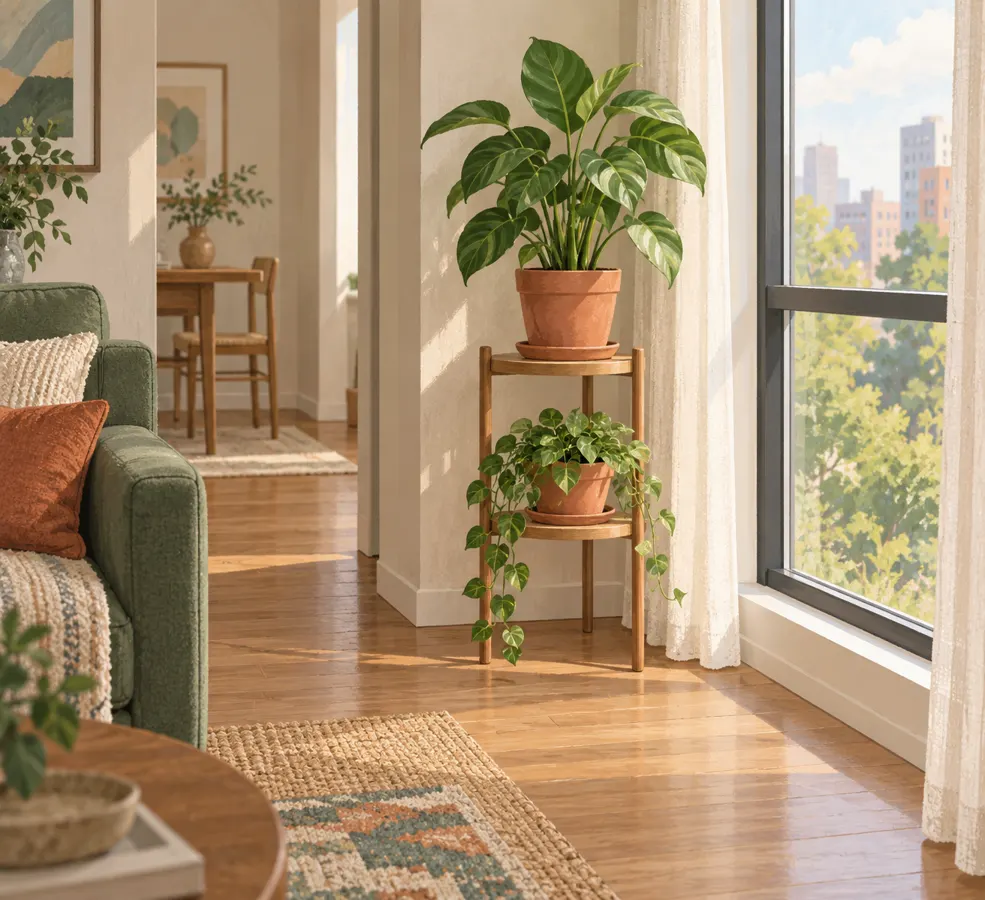
Create your plant corner beside the window, with a compact stand or a few carefully placed pots that leave the glass, window handle, and walking route accessible. Check the available light before choosing plants, then arrange them at different heights without filling every level. The goal is a small group you can water, move, and maintain easily.
Map the light and the space you actually use
Before buying a stand or another plant, look at your usable window in the morning, around midday, and later in the afternoon. Note where sunlight lands directly and where the room stays bright without direct sun. Check the intended pot position itself: a bright window does not mean that every nearby shelf receives the same light.
Next, measure the space beside the window and the width of the plants you already own, including their leaves. Open the window, move the curtains or blinds, and walk past the spot carrying something bulky, such as a laundry basket. These ordinary movements help define the space your arrangement can occupy.
- The window handle and the space needed for the sash to open.
- The path of curtains, blinds, and their controls.
- Access for cleaning the glass and sill.
- The walking route beside furniture and through the room.
Choose one compact arrangement
Our editorial proposal is to begin with one narrow stand beside the window and two plants at different heights. Place the taller plant toward the wall and the shorter one where its leaves can receive light without overlapping heavily. Leave the center of the window open, then assess the arrangement during everyday use before adding more.
If floor space is already occupied, an existing shelf may be a better starting point. Check that it receives suitable light and that you can lift the pot down comfortably. A hanging planter can also free the floor, but its foliage and suspension must stay outside the window’s opening path. Use fittings appropriate for the support and the planter’s watered weight.
Avoid treating every empty tier as a place that needs a plant. A stand works best when each pot is stable, accessible, and adequately lit. If reaching one plant means moving several others, simplify the group.
Match plant shape to the available light
Choose plants for both their growing conditions and their footprint. Upright foliage is easier to fit beside a window than a broad canopy extending into the room. Trailing plants can use shelf space, provided their stems do not spread across handles, curtains, or the walkway.
- Snake plant: upright leaves suit a narrow position; the supplied guides identify it as tolerant of lower light.
- ZZ plant: another lower-light option, though its outward-reaching stems still need space.
- Pothos: a trailing option for a lit shelf; pruning can help keep its growth within the corner.
Lower-light tolerance does not make a dark corner suitable indefinitely. Check the care requirements for the plant you select. If the intended position cannot provide enough light, move the arrangement closer to the window or consider suitable supplemental lighting. Leave room for future growth instead of judging fit only by the nursery pot.
Make watering easy and protect surfaces
Plan how water will leave each pot before placing it on furniture. A practical arrangement uses a draining inner pot inside a waterproof outer container, or a drainage pot with a suitable waterproof saucer. Check containers for leaks and keep moisture from sitting against wood, flooring, or the window ledge.
- Check each plant’s watering needs individually.
- Carry the inner pot to a sink or another suitable watering area.
- Water as appropriate and allow excess water to drain.
- Empty collected water from the outer container or saucer.
- Dry the pot’s exterior and check the surface before replacing it.
For a heavier pot that stays in place, keep its saucer accessible and use a controlled pour. Choose a stand that can safely support the pots when watered and sits securely on the floor.
Keep the corner manageable as plants grow
Recheck the arrangement as leaves and stems expand. Rotate pots periodically where appropriate so growth does not lean entirely toward the window, and trim trailing growth when it begins interfering with access. Keep foliage clear of curtain fabric and window hardware.
Before adding another plant, repeat the opening, cleaning, and walking checks. If the corner has become awkward to use, move a pot or reduce the group. A successful arrangement leaves enough space for both healthy growth and the daily routines that make a small apartment comfortable.