How to plan a neighborhood photo walk with a simple creative theme
· Editorial team newyorknewsdaily7.com
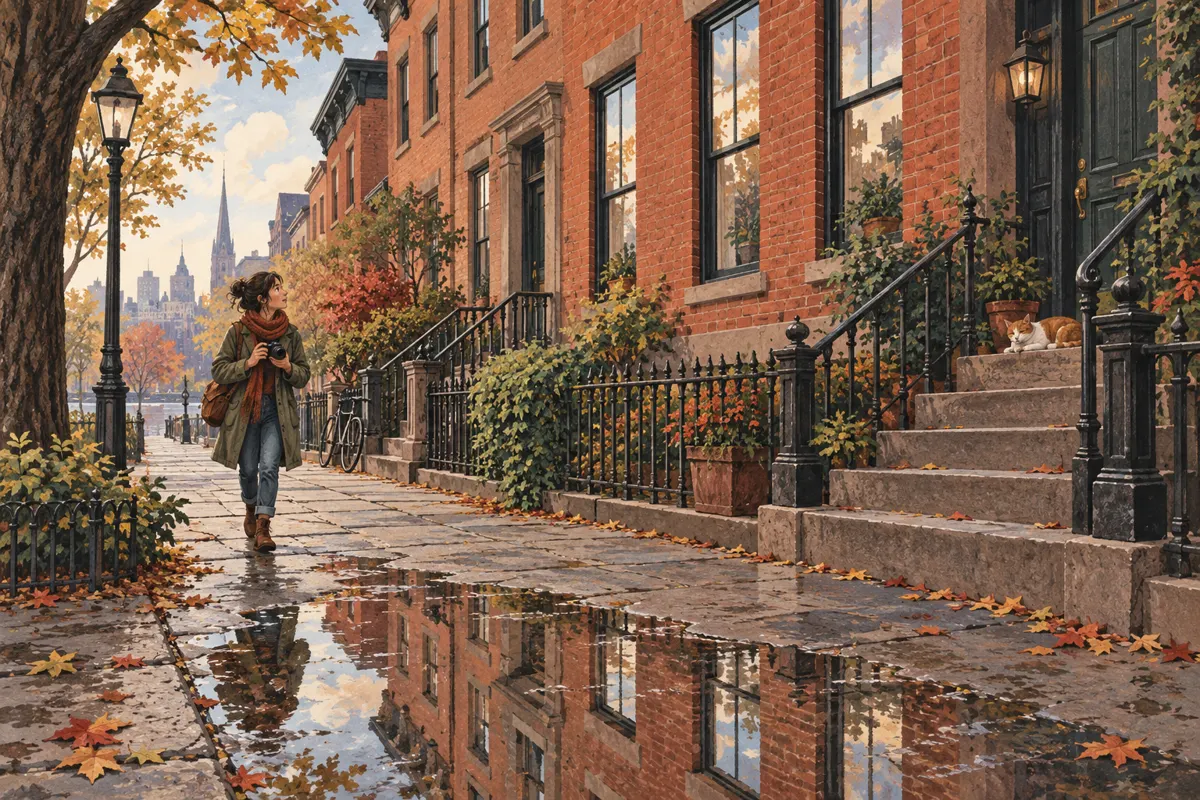
Plan a neighborhood photo walk by choosing one easy-to-spot theme, mapping a short route, and writing a small shot list before you leave. Take the phone or camera you already use, allow time to stop, and keep the plan flexible. The aim is to notice familiar streets more closely and return with a few photographs that belong together.
Choose a theme you can recognize on the sidewalk
A useful theme gives you something specific to look for without requiring a special location. “Textures” is easier to act on than “the character of the neighborhood”: you can look for rough brick, peeling paint, tree bark, or smooth glass. Photographers in the Click Community discussion describe using creative constraints while staying open to unexpected subjects.
- Textures: look for surfaces with visible differences in pattern or feel.
- Reflections: look at windows, puddles, and other reflective surfaces from a safe stopping place.
- One color: follow a color through doors, objects, plants, or building details.
- Repeating shapes: notice circles, grids, arches, or rows of similar objects.
Choose just one. Before leaving, finish the sentence “Today I’m looking for…” in plain language. If you cannot picture three possible subjects, simplify the theme. You can still take an unrelated photograph when something catches your attention.
Set a short route and a clear finish time
Start with a familiar, walkable area where you can stop comfortably. The PhotoWalk.Me planning guide recommends considering access, varied subjects, and rest stops. For a neighborhood outing, think about the practical details: where you will start, which crossings you will use, and how you will get home.
- Choose a loop of a few familiar blocks, or an out-and-back route with an obvious turnaround.
- Allow 45–60 minutes, including pauses to photograph.
- Pick two or three places where you can stop without obstructing pedestrians.
- Include a shortcut home so you can finish early if you get tired or the weather changes.
Treat this duration as a starting proposal, not a target you must meet. Photography adds pauses to an ordinary walk. A shorter route leaves room to examine a promising subject instead of rushing toward the endpoint. If walking with someone else, agree on the pace and finish time beforehand.
Write a shot list that changes your viewpoint
A shot list can give the walk purpose without turning it into a scavenger hunt. Use prompts about framing rather than demanding particular objects. That way, the same doorway, window, or patch of brick can offer several possibilities.
- A wide view showing your subject within the street.
- A close detail that makes the theme clear.
- Two contrasting examples in one frame.
- A repeated pattern with one element that breaks it.
- An unexpected interpretation of your theme.
For textures, contrast might mean rough stone beside smooth metal. For reflections, the unexpected frame might combine a reflected building with something visible through the glass. Leave a prompt unfinished if it does not fit what you find.
Keep equipment simple and stop with care
Photo walks can accommodate phones, film cameras, and digital cameras. The supplied sources also describe using one lens as a creative constraint. For your first outing, choose equipment you already know so you can spend your attention on subjects and framing.
- Check the battery and available photo storage before leaving.
- Clean the lens and take one sample photograph.
- Carry only what you are comfortable holding throughout the walk.
- Stop walking before looking closely at the screen or viewfinder.
- Keep entrances and sidewalks clear, and ask before taking a posed portrait.
At each stop, identify what attracted you, then check the edges of the frame for distractions. Try a small change in angle or distance from a safe position. If the light changes, check the next photograph before continuing.
Choose a small set after the walk
A proposed finishing exercise is to select three to five photographs that express your theme. Look for variety: a wider scene, a detail, and a different interpretation can make a more interesting set than several nearly identical frames.
Ask what drew your eye, which framing worked, and what you would change next time. If you walked with a friend, compare how you photographed the same surroundings; both sources describe sharing perspectives as part of the experience. Keep one useful observation for your next walk, such as moving closer or simplifying the background.