How to time a sheet-pan dinner when vegetables cook at different speeds
· Editorial team newyorknewsdaily7.com
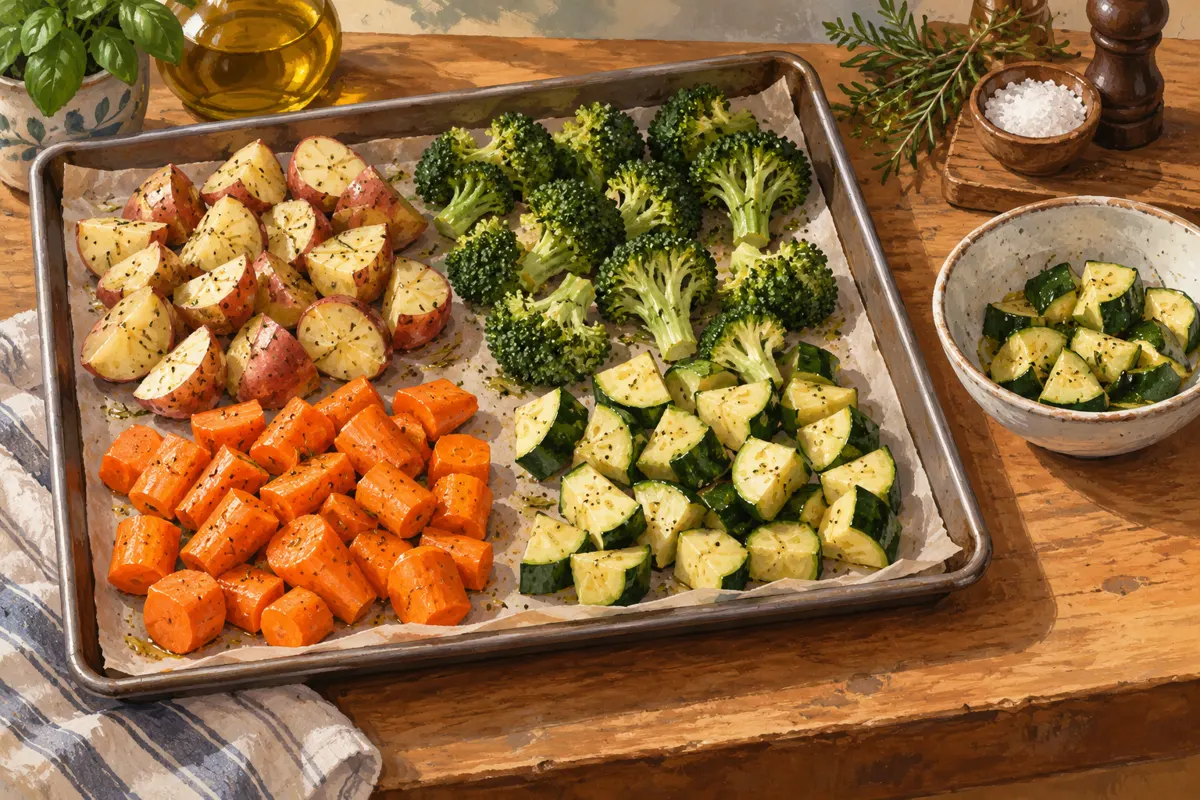
Start dense vegetables first, add faster-cooking vegetables later, and remove each kind when it is tender and browned. Cut size helps narrow the timing gap, but it cannot eliminate every difference. For a vegetable-only sheet-pan dinner, plan the cooking order before you toss everything together.
Group vegetables by how quickly they cook
Sort your vegetables into cooking groups while you prep. At 425°F, The Kitchn gives the following approximate roasting ranges. Use them to decide what goes into the oven first, rather than treating them as deadlines.
- Slower: potatoes, carrots, and beets generally need 30–45 minutes.
- Middle: broccoli, cauliflower, and Brussels sprouts generally need 15–25 minutes.
- Faster: zucchini, bell peppers, asparagus, and green beans generally need 10–20 minutes.
Vegetables within a group are easier to roast together. Broccoli and cauliflower make a straightforward pairing, for example. Onion timing depends on its cut and the browning you want, so avoid assigning it a fixed slot regardless of preparation.
Use cut size to reduce the timing gap
Keep pieces of the same vegetable roughly equal in thickness. A thick carrot chunk and a thin carrot slice will not finish together just because they share a tray. For tapered vegetables, divide the thick end more than the narrow end.
For mixed vegetables, a useful editorial proposal is to cut dense roots into smaller bite-size pieces while leaving softer vegetables in larger chunks. This brings their cooking times closer. Avoid cutting everything tiny: small pieces soften quickly and may give you less opportunity to develop browned surfaces.
Cut size is an adjustment, not a guarantee. Potatoes may still need a head start even when they are smaller than the broccoli florets beside them. Combine sensible cutting with staged additions.
Prepare the pan for the full dinner
Heat the oven to 425°F for the staged method below. Dry washed vegetables well, then toss each cooking group separately with oil, salt, and pepper. Aim for a light, even sheen without oil collecting in the bowl.
Check whether the entire dinner will fit in a single layer with gaps between pieces. An uncrowded first batch can become an overcrowded tray when you add the remaining vegetables. Have a second sheet pan ready if necessary; piling vegetables together encourages steaming and makes browning harder.
For a mix of roots and moisture-rich zucchini or eggplant, separate pans are particularly useful. RecipeTin Eats recommends roasting these groups separately. You can still stagger their oven entry and combine them for serving.
Add vegetables in stages
This proposed schedule uses potatoes, carrots, broccoli, and zucchini to illustrate the method. The checkpoints are starting points, not a tested recipe or a promise that dinner will finish at an exact minute.
- Start the potatoes and carrots. Spread the prepared pieces on a rimmed sheet pan and put them into the fully heated oven.
- Check after about 15 minutes. Turn the roots and assess their progress. If they are beginning to soften, add the broccoli, leaving space around the florets.
- Check again about 10 minutes later. Add the zucchini if the roots are approaching tenderness. Use a second pan if the tray would become crowded.
- Continue roasting and check at roughly five-minute intervals as vegetables approach doneness. Remove finished pieces while the others continue.
Let tenderness and browning decide the finish
Test a thick piece from each group with a fork. Roots should be tender through the center, and the vegetables should have browned edges or surfaces. Color alone is not enough: a potato can look ready outside while remaining firm inside.
- Tender but pale: give the vegetables more time if you want additional browning, keeping watch on delicate pieces.
- One group ready early: transfer it to a serving dish and let the slower vegetables finish.
- Uneven progress: check larger pieces individually instead of assuming the whole group is done.
Combine the finished vegetables for serving. As an optional editorial serving proposal, add fresh parsley and a squeeze of lemon at the table. The useful habit is to follow each vegetable’s progress, adjusting the schedule as you cook.